Stealth shopping in Europe: 50% of adults hide their purchases
Half of adults in Europe admit to stealth shopping, hiding purchases from partners or family out of shame or fear of conflict. A YouGov survey for Galaxus reveals surprising insights into secrecy in consumer habits.
Shame and fear of conflict are driving half of all adults towards stealth shopping in Europe. A YouGov survey conducted for online retailer Galaxus found that 50% of respondents admitted to hiding at least one purchase in the last 12 months. That’s one in every two people across Switzerland, Germany, Austria, Italy and France – 2,651 adults in total – choosing secrecy over transparency in their daily shopping habits.
The phenomenon of concealing purchases isn’t new. Back in 1895, Irish author Oscar Wilde quipped in An Ideal Husband: “No man should have a secret from his own wife. She invariably finds it out.” More than 130 years later, Europeans still haven’t taken his advice. Stealth shopping in Europe has become a routine part of modern consumer behavior, often motivated by two main factors: shame about what is being bought and fear of triggering conflict at home.
Where stealth shopping thrives
Country-level differences in Europe are striking. Italy leads the way with the highest proportion of stealth shoppers, followed closely by Austria. At the other end of the scale, France has the lowest rate of secret shopping, while Switzerland sits just above it. Germany lies in the middle, but with a notable twist: Germans are among the most likely to conceal purchases of sex toys.
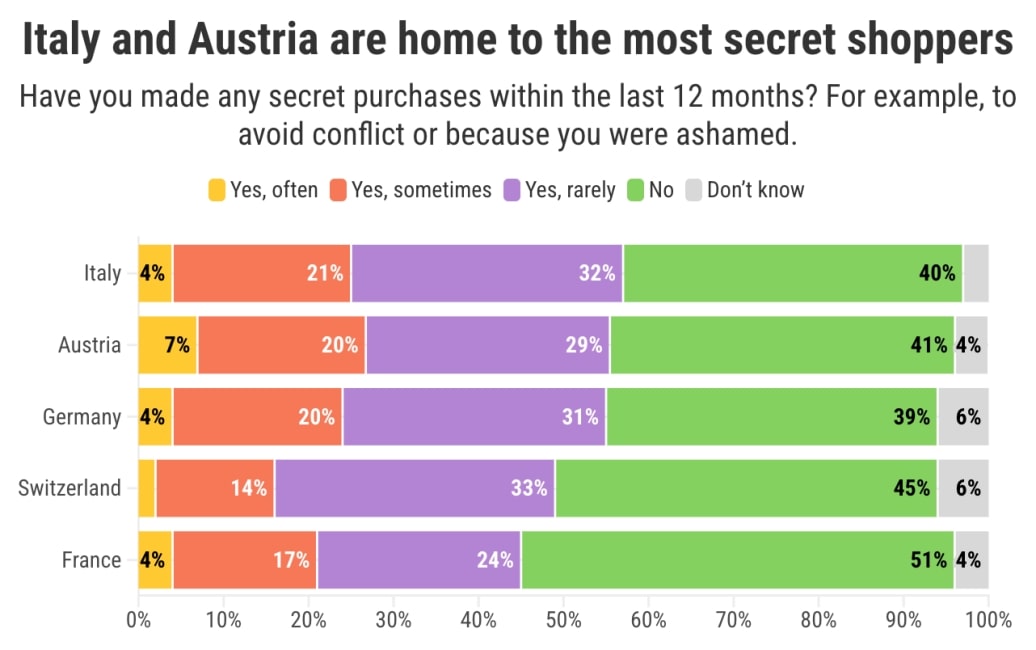
Overall, 50% of Europeans admitted to secret shopping, but in Italy and Austria that number rises significantly higher, making these two countries the true strongholds of the trend. France, by contrast, reported the lowest levels, showing that stealth shopping in Europe is shaped heavily by cultural context.
Age and gender: Who shops in secret?
The survey revealed that stealth shopping is most common among young people. Six out of ten adults under 30 – 60% – confessed to hiding purchases in the past year. By contrast, the rate drops steadily with age, making older Europeans far less likely to conceal their spending.
Gender differences were surprisingly small. Both men and women admitted to secret shopping at almost equal rates, showing that stealth shopping in Europe cuts across sexes and is more influenced by age, independence, and living arrangements than by gender roles.
When asked who they hide purchases from, 60% of respondents said their romantic partner. Parents came next, especially in Italy, where family structures play a stronger role. Italians tend to stay in the parental home until an average age of 30, compared with 26 across the EU and just 24 in Germany. That makes parents in Italy a more common target of stealth shopping secrecy than partners-an unusual reversal compared to the rest of Europe.
What Europeans buy in secret
The survey also shed light on what people are embarrassed to buy. One in three Europeans – 33% – admitted they would prefer to keep sex toy and lubricant purchases private. These adult products ranked highest on the list of concealed shopping categories.
Other frequently hidden purchases included:
- Fast food and sweets (ranked second)
- Clothes and shoes (third)
- Genital hygiene products and medications (also common)
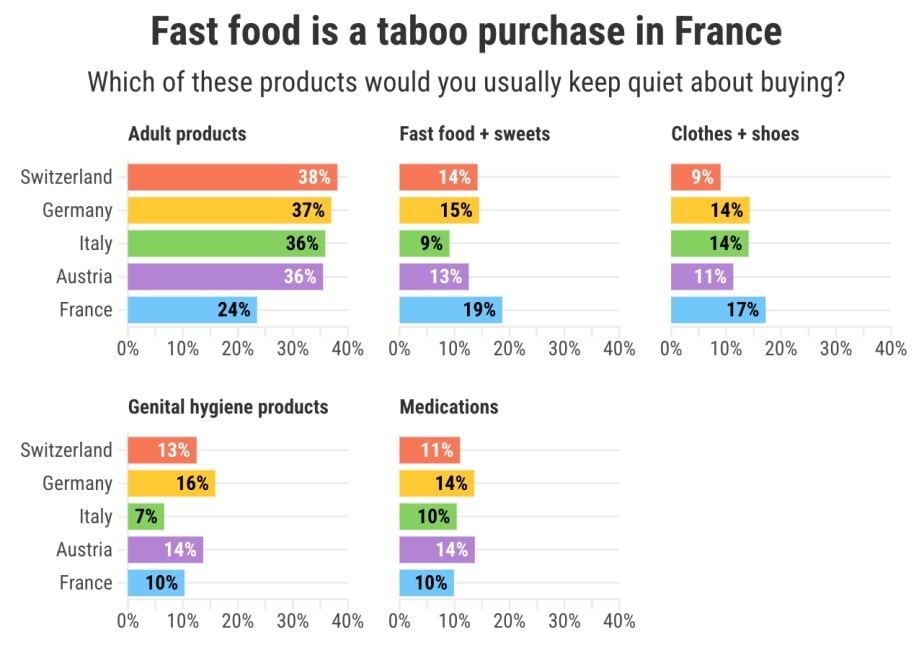
National differences were clear. In France, secrecy around sex toys was lower, but junk food purchases were the most likely to be hidden. Italians, on the other hand, showed little shame about indulging in chocolate or burgers, but were still secretive in other categories. In Switzerland and Germany, stealth shopping was most strongly associated with buying adult products, with Switzerland slightly ahead.
Online shopping and anonymity
The digital era has only fueled stealth shopping in Europe. Six in ten respondents said they prefer online shopping precisely because it offers more anonymity. Neutral packaging that doesn’t reveal the contents was also highly valued, making discreet delivery a strong selling point for e-commerce companies.
For retailers, this presents both an opportunity and a responsibility: to recognize that discretion isn’t just a convenience, but a driving factor for millions of customers who don’t want their purchases exposed.
What stealth shopping reveals about us
At first glance, stealth shopping in Europe might seem trivial—a hidden chocolate bar here, a quietly ordered sex toy there—but the numbers suggest something deeper. When 50% of adults admit to concealing purchases, it shows that even in a more open and tolerant society, people still cling to small private vices and protected spaces.
The question is whether those secrets strengthen independence or erode trust. As Wilde warned, secrets rarely stay hidden forever. Stealth shopping in Europe highlights not just consumer trends, but also the delicate balance between honesty, privacy, and intimacy in modern life.
***