Behind the Click Podcast with Shivany Powani: leadership by influence
Written by
Editorial TeamPublished on
Discover Shivany Powani’s five habits for leadership by influence in Behind the Click Podcast – see how to build trust, handle pushback, and drive impact in e-commerce.
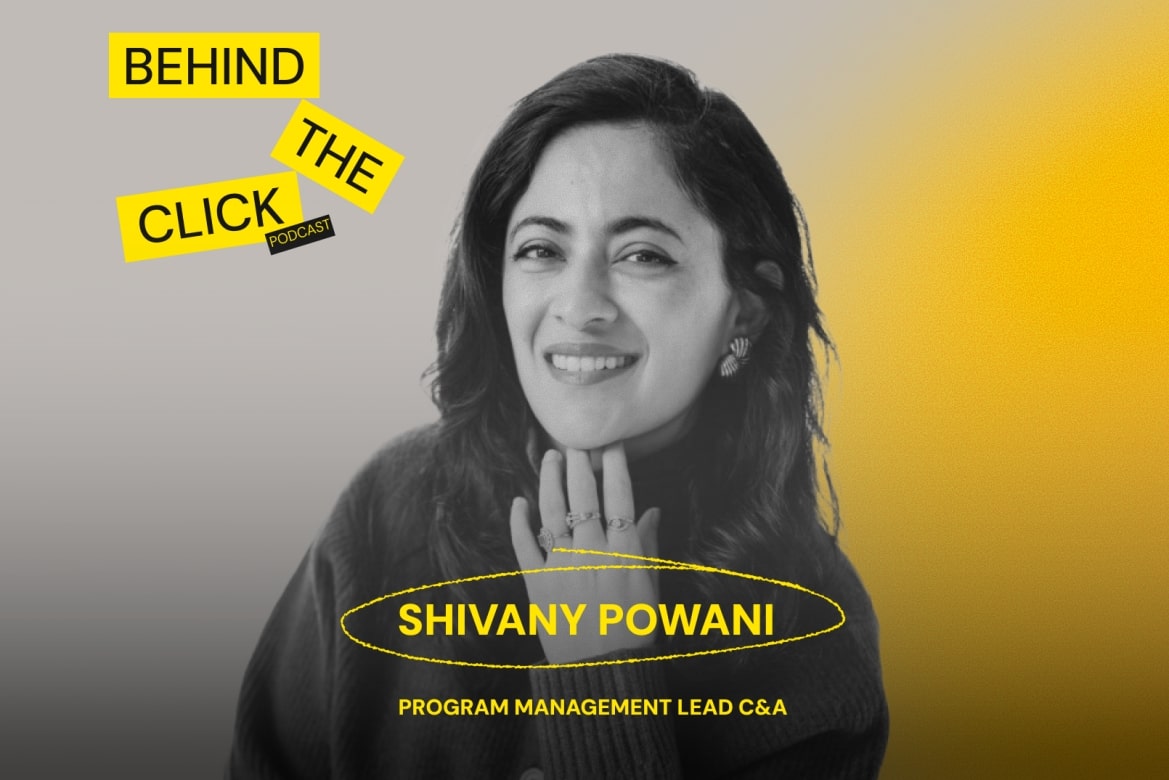
In a fast-moving industry like e-commerce, traditional leadership structures often can’t keep pace with the complexity of projects or the speed of change. That’s why the latest episode of Behind the Click, powered by E-commerce Berlin Expo, feels so relevant. Host Janine Vanessa Heinrich sits down with Shivany Powani, Program Management Lead at C&A, to explore how program managers and other professionals can shape outcomes and build impact without waiting for titles.
For Shivany, this isn’t theory – it’s how she has spent more than a decade driving business-critical projects across fintech, software, and e-commerce. Her central message is clear: leadership is about influence, not job titles.
Rethinking what it means to lead
When most people picture leaders, they think of executives with decision-making power built into their role. Shivany sees it differently. Program managers, she explains, “earn their leadership every day” by connecting the dots between people, strategy, and communications.
They might not own the final decision, but they make it possible for organizations to deliver results. Their value lies in simplifying complexity, creating alignment, and keeping the vision visible.
“It’s collaborative leadership,” she says. “Driving consensus together, moving forward together, making space for inclusion.”
Shivany’s five habits of influence
Shivany shared her personal “playbook” for building influence across teams and industries. These five habits, she explains, are what allow her to move projects forward – even when she doesn’t have direct authority.
- Assume good intentions
Adapted from parenting expert Dr. Becky Kennedy, this mindset shift helps remove bias from interactions. Starting without judgment creates trust and a safe space for open conversation. - Build trust
Trust comes both from relationships and from competence. Showing integrity – aligning your words and actions – makes others more likely to follow your lead. - Be data-driven
Data supports instincts and neutralizes arguments. In high-stakes environments, evidence builds credibility and reduces pushback. - Adopt a growth mindset
Failures aren’t the end – they’re inputs. By owning mistakes and treating experiences as learning, leaders by influence set the tone for resilience. - Recognize value
To truly influence, you must show others what’s in it for them – whether that’s new opportunities, skill growth, or tangible rewards.
Shivany is quick to admit this doesn’t happen overnight. Building trust or assuming good intentions can begin immediately. But being data-driven or recognizing value often require time, context, and organizational support.
Program managers as culture shapers
One of Shivany’s strongest points is that program managers are not just support staff. In fact, they often function as culture shapers.
In e-commerce especially, where seasonality and sales cycles create immovable deadlines, it’s easy for teams to get lost in detail or pulled into reactive fire-fighting. Program managers, Shivany argues, keep teams anchored by continually resurfacing the “why.”
“Who is this really for? Ultimately, it’s the customer,” she says.
Her approach at C&A emphasizes ownership. Rather than micromanaging, she creates a framework, aligns on a vision, and then empowers her team members to bring their own strengths to the table. Weekly catch-ups aren’t just for progress, they’re spaces for peer learning, where team members exchange what’s working well and where they need help.
Facing pushback and finding balance
Of course, influence without authority comes with friction. Pushback can come from peers, from leadership, or even from systemic bias. Shivany has faced all of it.
Her go-to tool? Preparation. Grounding arguments in data and presenting well-researched recommendations. “It’s very hard to argue with data when it’s put out clearly,” she explains.
Still, she acknowledges the reality: sometimes decisions don’t go your way. The key then becomes motivating your team, finding alternative wins, and keeping morale intact even when strategy shifts.
The AI factor: Efficiency meets human connection
No modern leadership conversation is complete without AI. Shivany describes AI as a force multiplier – a tool that can make organizational tasks faster and more efficient.
But she draws a clear line: the most critical aspects of leadership – empathy, trust, diplomacy – remain human. AI can support processes; it cannot replace the relationships that underpin influence.
Lessons from the journey
Shivany’s career path itself is instructive. Becoming a program manager was a “happy accident,” sparked by mentors who recognized her potential and encouraged her to step up. Along the way, she experienced both poor leadership and great leadership and she learned as much from the negative examples as from the positive ones.
Her advice?
- Don’t rely on others to advocate for you. Do great work, but also talk about it. Quiet contributions often go unnoticed.
- Seek inclusion in decision-making. Early in her career, she had to fight to be invited to strategic discussions. Today, she advocates for her own team to have those opportunities.
- Practice intentional learning. Even amid the pace of e-commerce, carve out time to deepen your knowledge and broaden your perspective.
- Balance collaboration with decisiveness. Leadership is fluid – you must be able to work inclusively and know when to take charge.
Impact driver
For anyone building a career in e-commerce or tech, Shivany’s insights strike a chord. Leadership isn’t just about hierarchy. Influence, empathy, and trust can be equally powerful tools for creating impact.
Her story shows that program managers – and anyone willing to adopt these habits – can move from “support function” to impact driver.
To hear Shivany’s story in full, in her own voice and with all the nuance that can’t fit on a page, watch the complete episode of Behind the Click:
You can also listen to the episode on the Spotify or Apple Podcasts.
***